Jul 12, 2026 · 5 min read · Itercycle Navigators
Why Traditional Diets Usually Fail and How Itercycling Fixes That
Traditional diets make you sacrifice immediate pleasure for some far-off indefinite gain. Itercycling, instead, makes the process fun so it does not feel like deprivation.
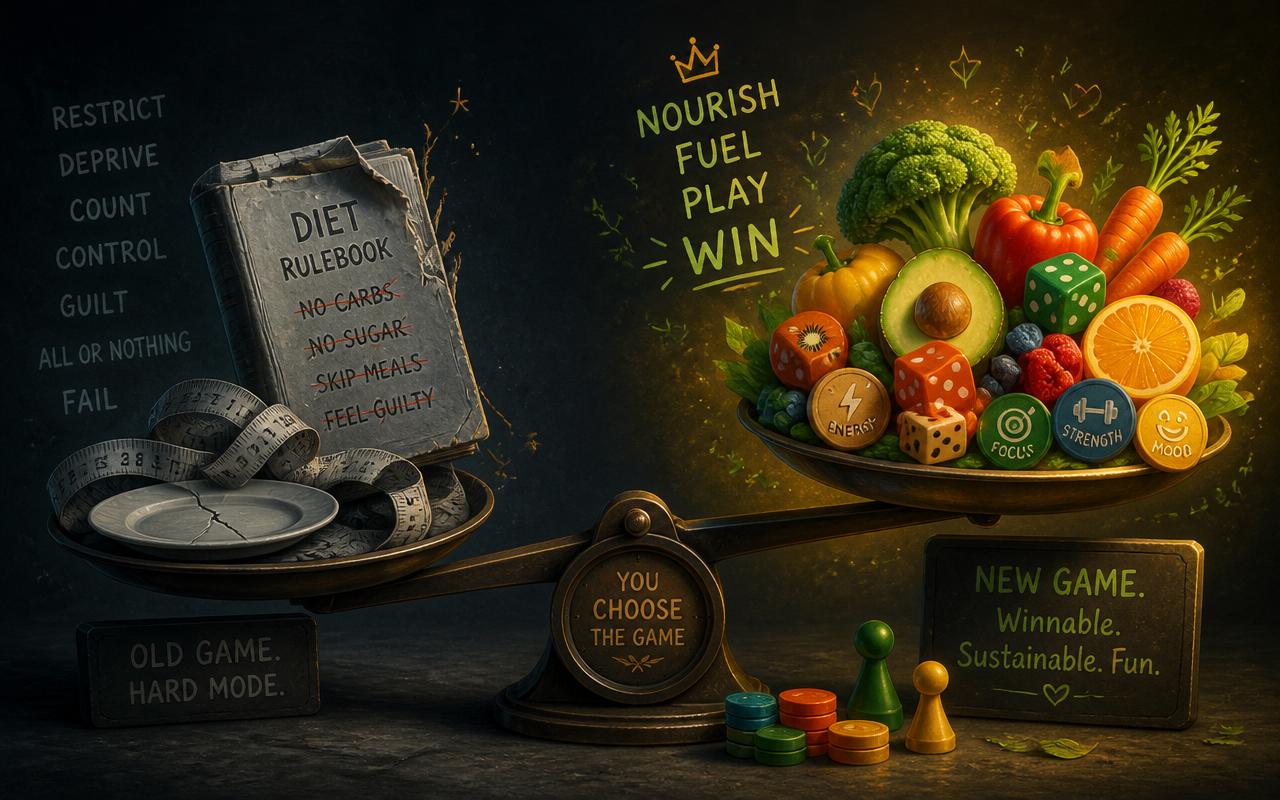
It doesn't take a peer-reviewed study to see that traditional diets just don’t work for most people. All you have to do is look around. People constantly white-knuckle their way through misery, only to end up right back where they started.
To me, the answer relies on simple common sense. Diets fail because they are built on a terrible sales pitch that I call the "sacrifice shuffle." The deal goes like this: Give up pizza, birthday cake, and literally everything else you actually enjoy right now. In exchange, maybe, in six months you will step on a scale and see a number you like. That is a fundamentally bad deal. As humans, we aren't wired for endless, joyless deprivation. When the process of changing how you eat feels like a chore, you eventually run out of the grit required to keep going.
The real culprit behind this struggle isn't a lack of discipline. Instead, it's a collection of sneaky default behaviors that we follow out of pure inertia. Fixing how you eat starts with putting on a detective hat and identifying these autopilot ruts. Take the classic habit of reaching for a nightly dessert—half the time, you don't even actually want that piece of cake; it's just sitting there, so your brain on autopilot says "eat it". Once you shine a light on these defaults, you can reprogram the system. The ultimate goal is to tune your lifestyle machine so you eat well by default. That doesn't mean forcing yourself to eat perfectly all the time, because food should be a source of pleasure and fuel, not the enemy. It just means you stop letting mindless ruts steer you while your brain is off duty.
So, how do we fix this broken system? My theory is simple: You have to make yourself actually want to change. And the only way to do that is to make the process fun. The strongest motivator we have isn't fear of a scary diet, guilt from a judgmental weigh-in, or even sheer willpower, which runs out faster than a phone battery. It’s enjoyment. If you make the journey itself a blast, you aren't doing the sacrifice shuffle anymore. It is not a sacrifice if you want to do it. When fun replaces sacrifice, the journey becomes the reward.
This is the core logic behind Itercycling. Instead of making a terrifying, forever commitment to a miserable regimen, you treat behavior change -- such as learning to eat well -- as a winnable game of strategy. You take ownership of the process and run short, repeatable cycles that usually last just three or four days. If you hit a few easy targets, you get to pat yourself on the back and rack up wins. If you miss, no biggie, because the next round starts very soon. By focusing on fun and short-term wins, the results just sneak up on you. You stop being a miserable passenger on a joyless diet and become the active engineer of a ride you actually enjoy.
Keep reading
Oct 13, 2026
What Logistics Can Teach Us About Plan A and Plan B
Plan A gives us direction. Plan B helps us keep going when life intervenes. Logistics offers a practical model for making meaningful change survive real life.
Aug 29, 2026
With Age Comes Wisdom — And How About Speed?
Physical decline is a choice that should be refused.